Sindum Camera #2 v2
There is a whole world of inspiring projects with brilliant people building all kinds of cameras using 3D printing. I have bought and tested some, and I follow a lot of the projects.
My first camera was a Will Travel Friendly Camera, designed and built by Morten Kolve, built for my 150mm lens. It sparked my journey into 4x5 photography and a lot of learning. Using a 150mm lens, it was somewhat bulky and difficult to carry.
My next camera was from Chroma Camera — a 4x5 camera with an adjustable bellows, with spacers to fit my (then) new 90mm lens. It made for a more practical camera to carry and set up. It's no longer available from Chroma, who now have a lot of other fantastic designs.
Common to both cameras is that the focus screen and the spring-loaded mechanism for holding the film holder and hood are part of the camera, and are somewhat flimsy. There's a lot of spring tension and precision involved in building a good, well-functioning large format rear standard.
Thinking about creating my own camera, I got the idea to find an available module from an existing system that is easy and cheap to obtain. After some research, I came upon the TOYO 4x5 view camera, where the rear standard is a removable part.
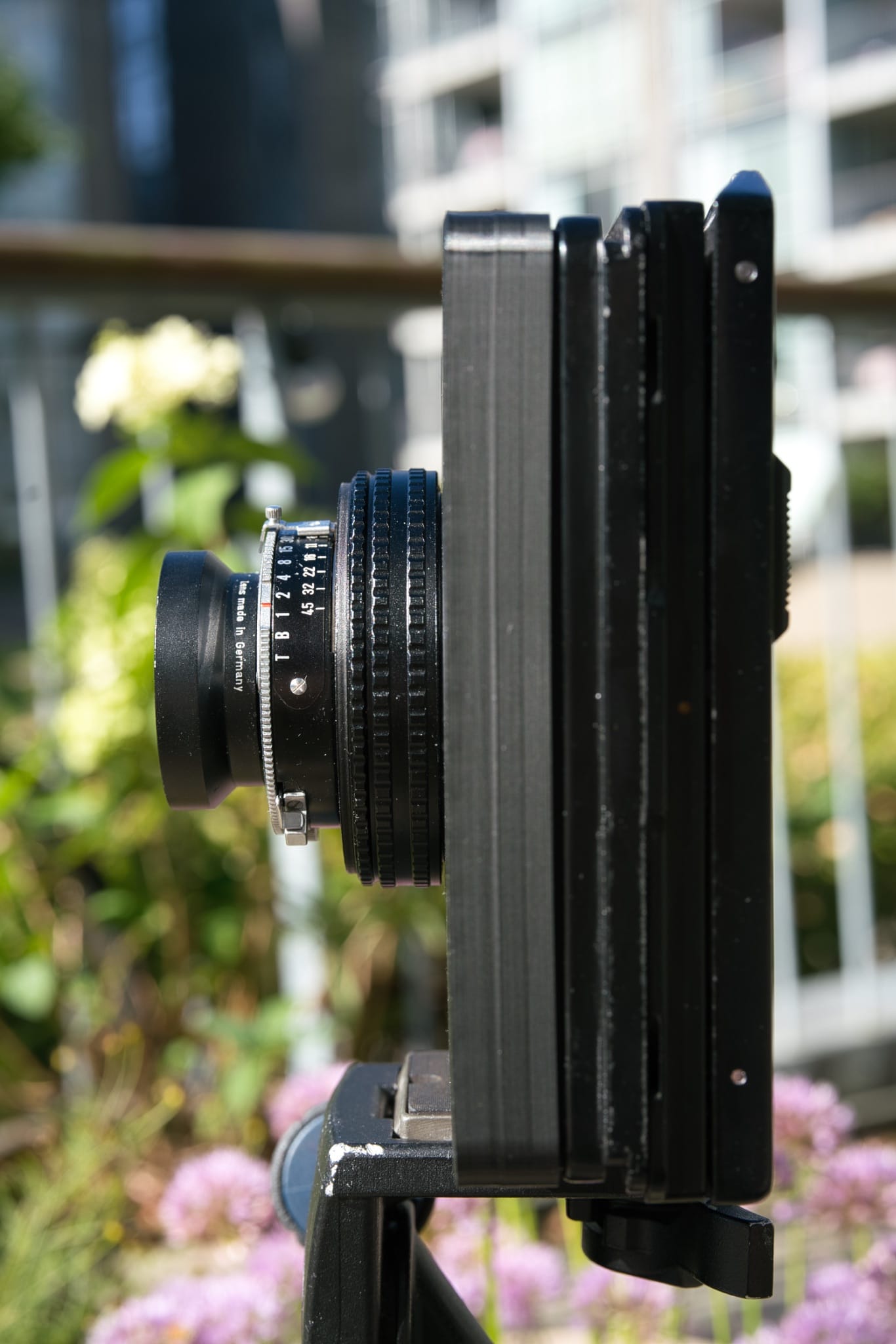
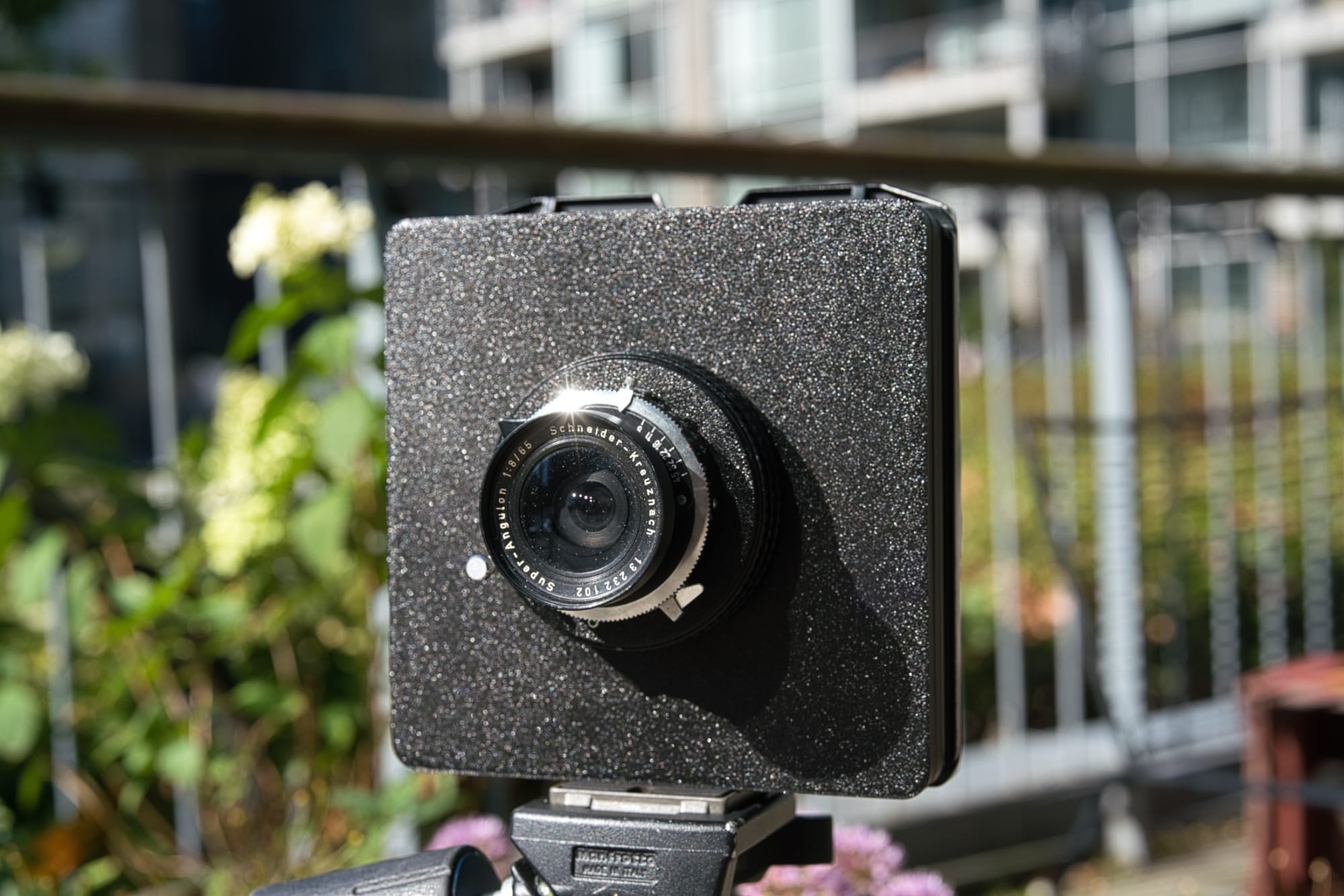
A TOYO rear standard, obtained on eBay, is now the base for my new camera design project, "Sindum Camera #2."
I have taken inspiration from the DAYI Sinar 4x5" camera in designing for a 65mm lens. This makes for a very portable, easy-to-focus camera. Different from the DAYI camera, which uses a base and cone solution, I decided to make Sindum Camera #2 custom-built for the 65mm lens, and focused on designing a very simple-to-print solution. This way, I can simply design and print an entirely new camera for another focal length without having to deal with a cone-mount solution.
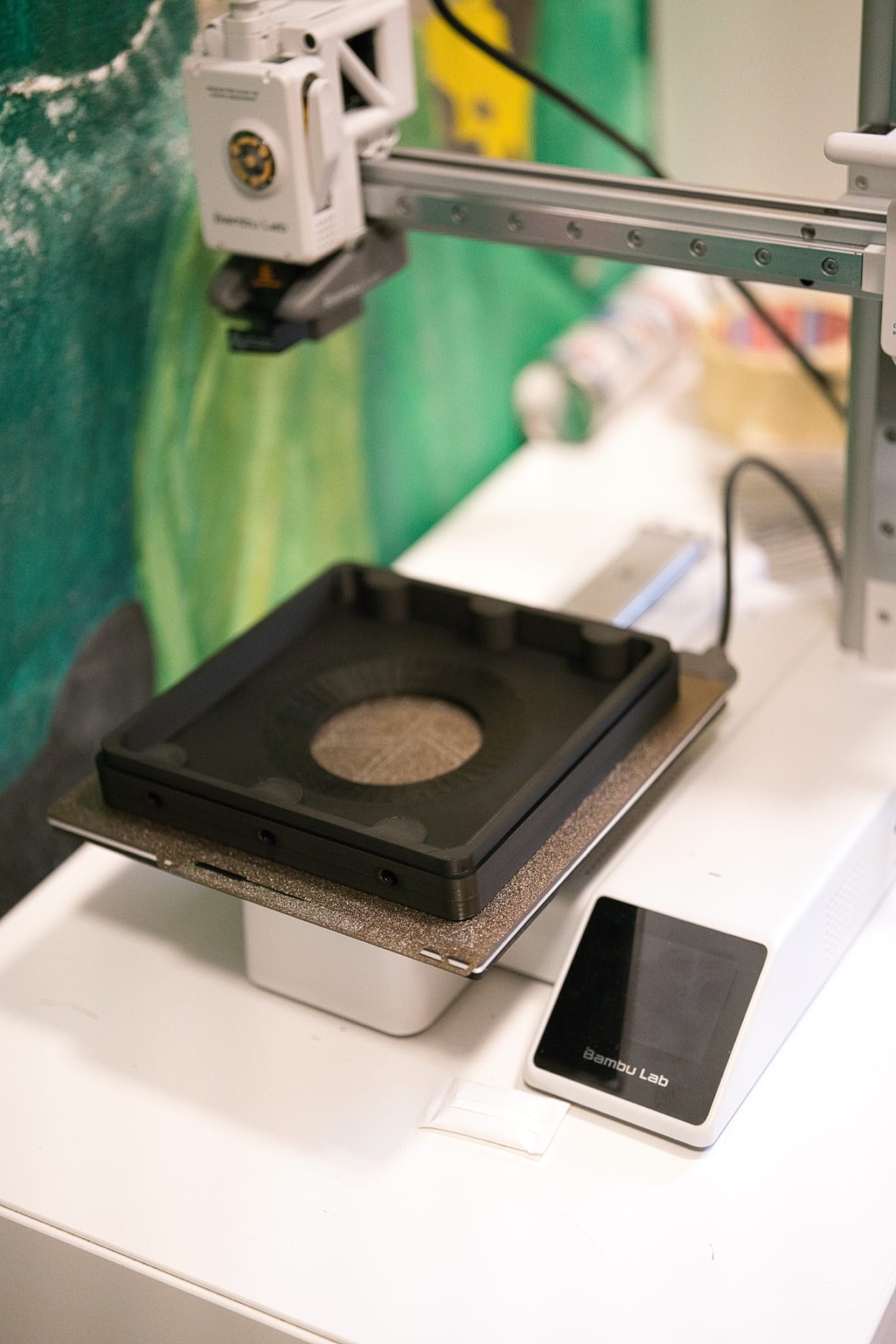
The first print served to test the basic measurements for making a precise and tight fit to the TOYO back, and the mount for the focus helicoid. I designed it to use a metal mount for the helicoid. However, I later found that my new printer can very nicely print the thread for the M65 mount. Therefore, I decided to just print the M65 mount.
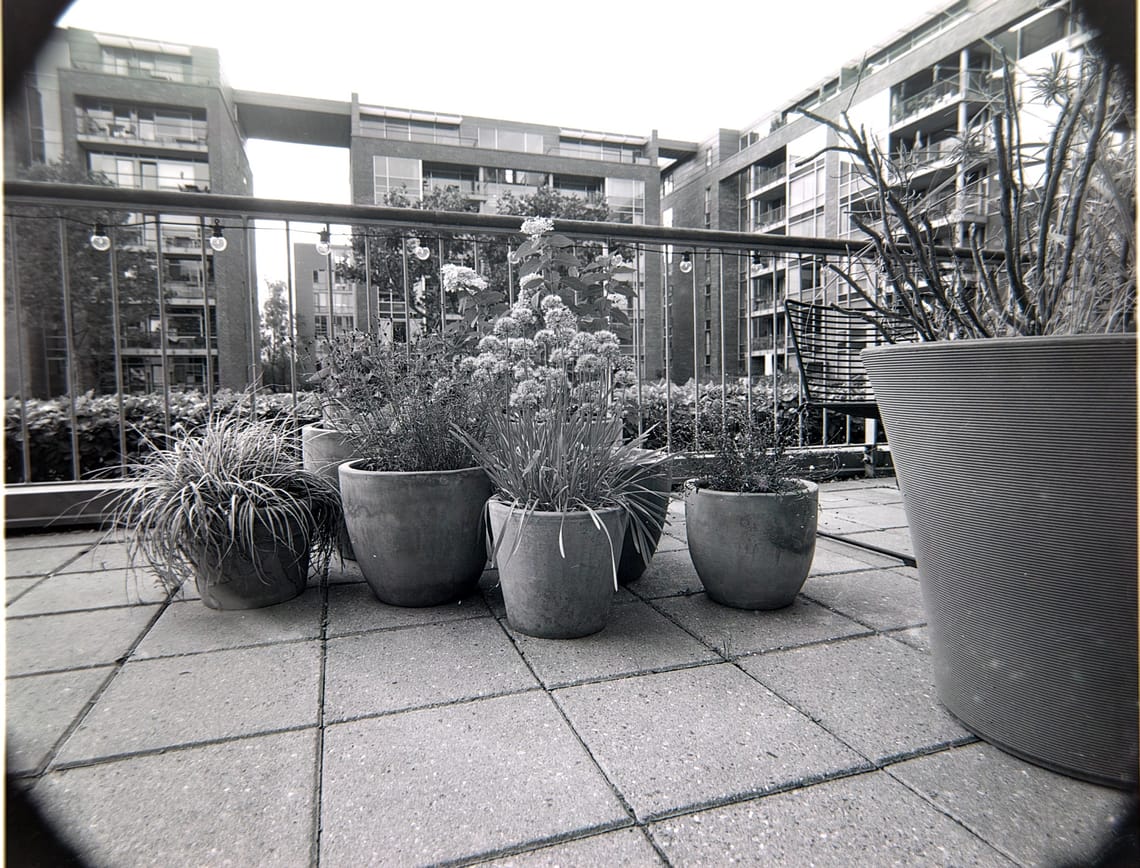
The camera and picture in the article are from print number 2. As can be seen from the test shot, it has a problem with clearance in the corners. On later inspection, this was actually easily visible: when focused, the lens was extended so deep into the helicoid that it blocked the view to the corners of the film. I found that the camera should be 3mm deeper, and that I could design a coned recess inside to ensure that the camera itself would not block the light.